Quick answer: Reading glasses are plus-powered lenses that make close-up text sharp again once your eyes find it harder to focus near, which for most people starts in their 40s. Ready-made readers can work if both eyes need the same power and you have no astigmatism; otherwise prescription reading glasses, made to your exact numbers and pupil distance, are the more comfortable choice.
Holding your phone at arm’s length, turning up the light to read a menu, or taking your glasses off to see a price tag are all classic signs. This guide explains what reading glasses actually do, how to tell whether you need them, and how to choose a strength and frame that suit the way you live and work.
Why close-up focus fades with age
Inside the eye sits a natural lens that changes shape to switch focus between far and near. Over the years it gradually becomes less flexible, so focusing on small print takes more effort. This change is called presbyopia. It is a normal part of ageing rather than an eye disease, and it happens to people who have never needed glasses as well as to those who already wear them.
Common early signs include:
- Moving books, phones or receipts further away to read them
- Needing brighter light for reading than you used to
- Tired eyes or a heavy feeling in the forehead after close work
- Small print on medicine boxes, labels or restaurant bills looking fuzzy
- Short-sighted people finding they read better with their glasses pushed up
Blurry close vision can have other causes too, so an eye test is the right first step before you buy anything.
Ready-made readers vs prescription reading glasses
There are two routes to reading glasses, and the right one depends on your eyes rather than your budget alone.
Ready-made readers
- Have the same plus power in both lenses
- Use an average distance between the lens centres, not your own
- Do not correct astigmatism
- Can suit people whose eyes are similar and who only read occasionally
Prescription reading glasses
- Are made to the power each eye needs, which is often different left and right
- Include any astigmatism correction (CYL and AXIS)
- Are centred on your own pupils using your PD measurement
- Tend to feel more comfortable for long reading, desk work and hobbies
If your optometrist has written an ADD value on your prescription, that number is the extra near power you need. Our guide on how to read an eyeglass prescription explains where ADD sits alongside SPH, CYL and PD.
How to choose the right reading glasses strength
Reading powers are written in dioptres, such as +1.00, +1.50 or +2.25. A few practical points help you get it right:
- Get your eyes tested. Your optometrist will measure your near power at the distance you actually read. Guessing from a shop rack often ends with a pair that is too strong.
- Think about distance. A book held close needs more power than a laptop screen further away. If most of your near work is on a computer, tell your optometrist, because a lower power is often more comfortable for screens.
- Stronger is not better. Too much power shortens your clear reading range and can cause strain. The aim is clear, relaxed vision at your usual working distance.
- Expect changes. Near power usually increases gradually over the years, so recheck your eyes if reading starts to feel hard again.
Picking a reading glasses frame you will actually wear
Many people only reach for readers when they have to, so comfort and looks matter more than you might think.
- Full-time vs grab-and-go: If you read for hours, choose a stable full-rim frame with good nose support. For quick glances, a lighter metal frame is easy to carry.
- Lens height: A frame with a reasonable lens depth gives your eyes room to move down the page without peering over the top.
- Size: Check the three numbers on the temple, such as 53-19-145 (lens width, bridge and temple length). Matching these to a pair that already fits you is the easiest way to buy online. Our face shape and frame size guide covers this in more detail.
- Style: Readers no longer need to look like an afterthought. A good-looking frame makes you more likely to wear them instead of squinting.
Reading glasses for men and women: frame ideas
Most frames suit any reader, but people often start with a style that matches their everyday look.
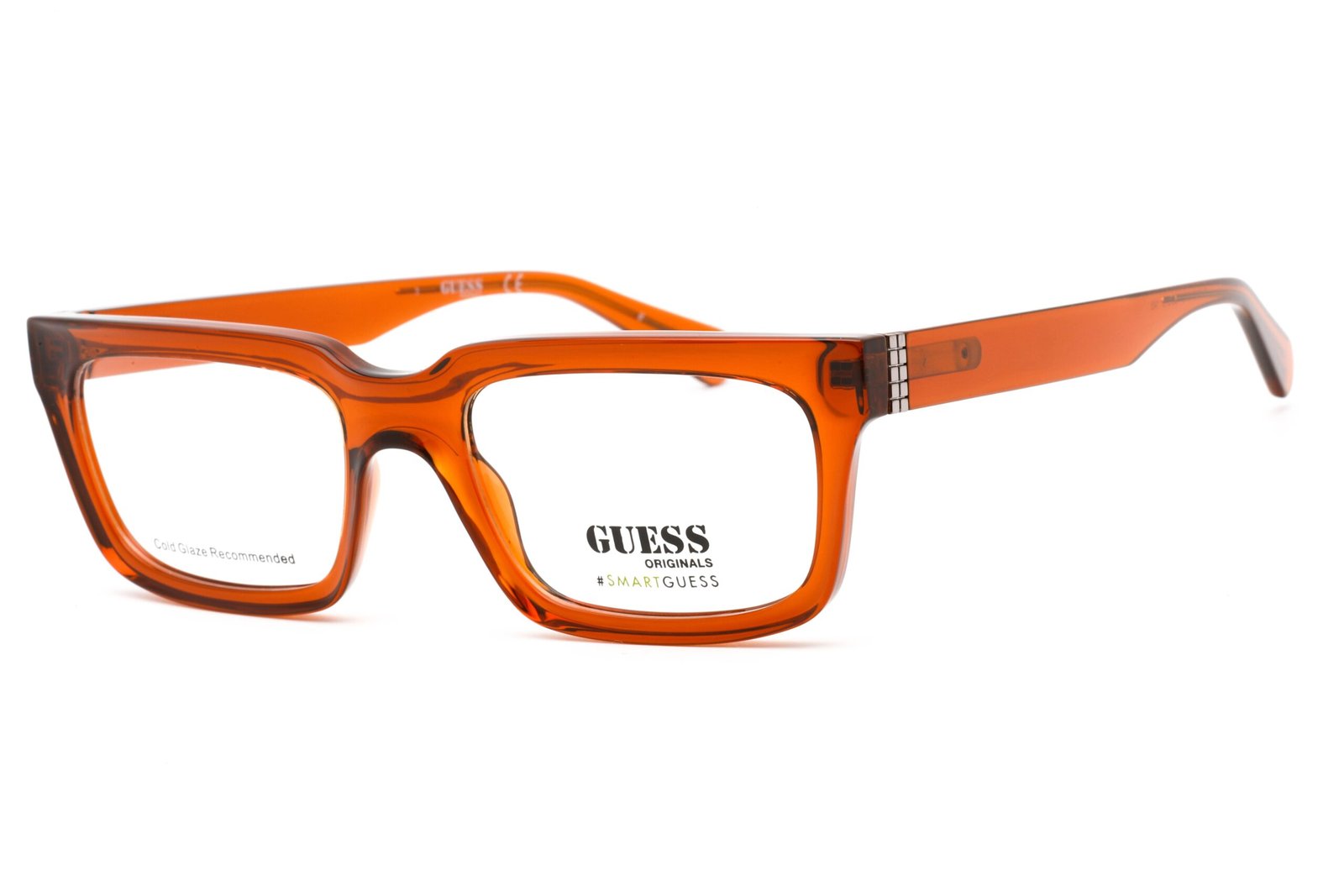
- Reading glasses for men: Rectangular and square shapes in darker acetate or metal look sharp with office wear. The Guess GU8253 is a rectangular full-rim frame in shiny light brown that works for work and weekends.
- Reading glasses for women: Softer round, cat-eye and aviator outlines add personality. The Prive Revaux Lee is a champagne gold and tortoise aviator frame with a light metal build.
Both are unisex, prescription-ready frames. You can browse more shapes and materials in our glasses collection.
Ordering prescription reading glasses online
- Pick a frame from the glasses range.
- Choose single-vision lenses. They come with anti-reflective and scratch-resistant coatings as standard, which help with glare from lamps and screens.
- If you read on screens a lot, consider adding blue-light filtering, or see our blue light glasses. Our honest look at whether blue light glasses work explains what to expect.
- Enter your reading prescription or upload a photo of it at checkout, including your PD.
Not sure which numbers to enter for a reading-only pair? Message our team on WhatsApp at +971 56 308 8840 before you order. We deliver across the UAE, Saudi Arabia, Qatar, Kuwait, Bahrain, Oman and Egypt, with a 15-day return and exchange.
One more tip: reading glasses are made for close work, so they will blur the view across a room or road. Outdoors, switch to sunglasses; every pair we sell has UV400 protection.
Frequently asked questions
What strength of reading glasses do I need?
It depends on your eyes and how far away you hold your reading material. An eye test gives you an exact near power for each eye, which is more reliable than trying powers in a shop.
Is it bad to wear reading glasses all day?
Wearing them will not weaken your eyes. However, readers are only clear up close, so wearing them while walking or looking across a room will feel blurry. Take them off for distance, or ask your optometrist about other lens options if you switch often.
Can I use my reading glasses for the computer?
Sometimes, but a screen usually sits further away than a book, so your normal reading power may feel too strong. Let your optometrist know your screen distance so they can suggest a suitable power.
Why do my new reading glasses give me a headache?
The power may be too strong, the lenses may not be centred on your pupils, or one eye may need a different power from the other. These are common issues with off-the-shelf readers, and an eye check usually sorts them out.
This article is general information and does not replace an eye examination. If your near vision changes suddenly or you notice other symptoms, see an optometrist or ophthalmologist.